Statement earrings in everyday rotation: weight, hair, and the neckline math
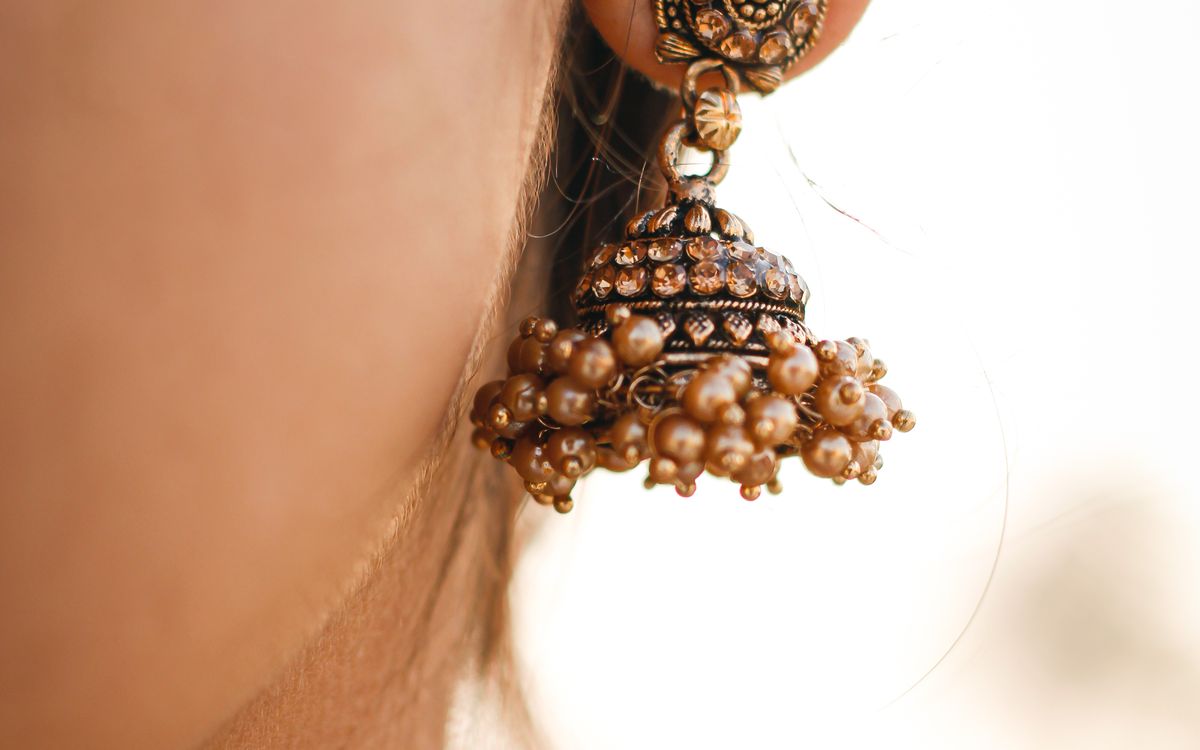
The statement earrings that get compliments at a party and the statement earrings that survive a workday are rarely the same pair. The difference is not the design itself — it is whether weight, hair, and neckline were considered as a system before the pair left the jewelry box. Scale reads differently at noon under office light than it does at eight in the evening, and a pair that feels fine for two hours can turn into a negotiation with your own earlobes by four. Treated properly, big earrings are an everyday proposition, not a costume-box reservation. The system below covers what to look for, what to skip, and how to wear a dramatic pair so that it earns a second outing.
Scale is measured against your frame, not the photo
The first mistake is buying scale from a product photo. A drop that reads as dramatic against a bare model shoulder can disappear entirely under a collar, or read as costume on a smaller frame. The measurement that actually matters is not your face shape — the internet has plenty of that advice and most of it overrates itself — but the distance from your earlobe to your shoulder. That distance is the runway the earring gets, and it is fixed no matter what you buy.
As a working rule for daylight wear: a drop that ends above the jawline, or just brushes it, reads as intentional on most faces. Past the jaw, the piece starts competing with conversation rather than accompanying it, and the effect shifts from styled to loud. If your lobe sits close to your shoulder, favor shorter drops and wider silhouettes — buttons, wide hoops, geometric studs — which trade vertical length for visual weight without eating the runway. The good news is that the same rule scales in reverse: a shorter runway makes modest drops read as statements, which is worth knowing before spending on oversized pairs.
Weight decides whether a pair earns a second wear
A statement earring is worn twice: once for the outfit, and once for how it felt at the end of the day. The second wearing is the one that decides whether the pair joins a rotation or retires to the occasion drawer. Most buying advice stops at the first, which is how drawers fill up with beautiful pairs that were worn once.
Where the weight is actually felt
Weight does not distribute evenly across earring styles, and where it sits changes the comfort math. Post styles hang the entire load from the lobe itself, so the tissue takes the full force for as long as the pair is on. Drop styles on a hook or a top-mounted post spread part of the load along the lobe’s edge, which many ears find more forgiving at equal mass. Whatever the construction, the practical test is simple: if you are aware of the earring without thinking about it — the slight tug, the need to shift it — the pair is already above your comfort line, and a full day will only amplify the awareness.
Materials that buy size without grams
This is where hollow construction and non-metal materials earn their place in a serious jewelry box. Hollow gold forms carry the visual scale of solid metal at a fraction of the weight, and resin, acetate, and textile-based statement pieces do the same work in different registers. If a pair’s drama comes from surface area rather than solid mass, the end-of-day report changes entirely. For how plated and hollow constructions differ over years of wear, the vermeil explainer covers the constructions worth knowing before buying.
Hair changes the risk profile, not the rules
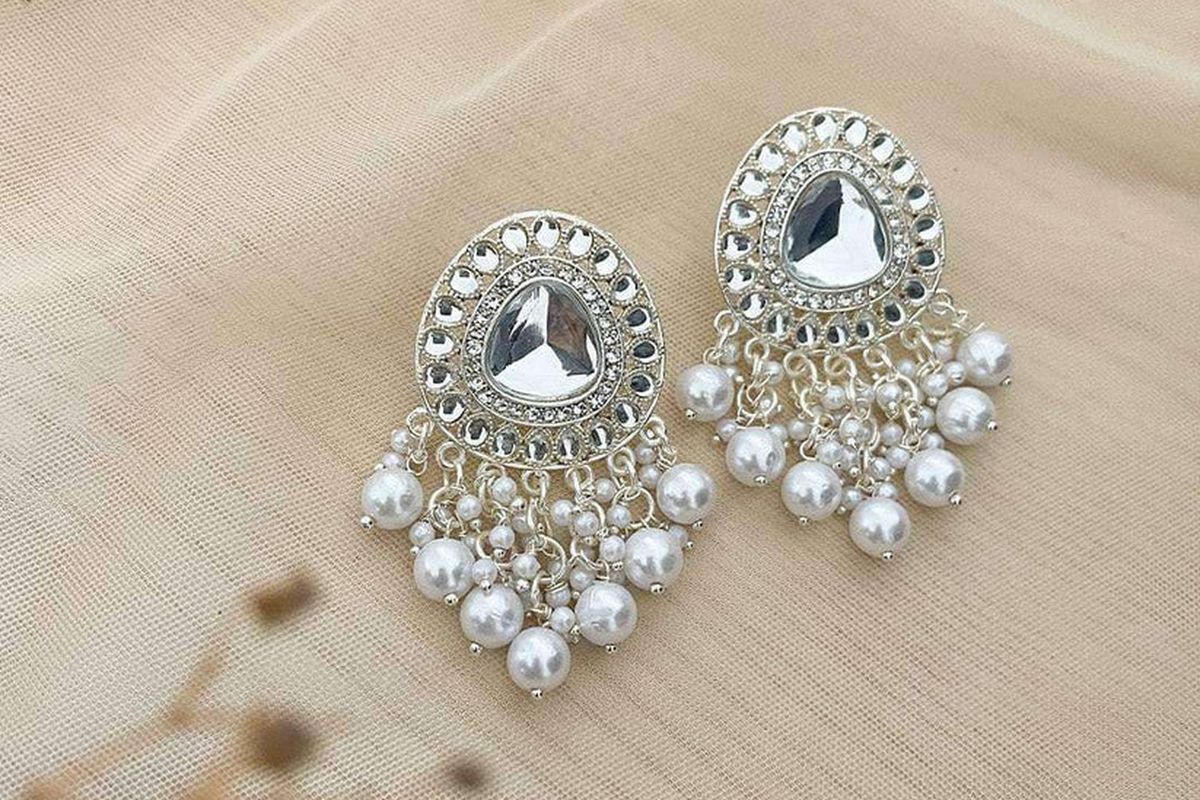
Hair up is the classic statement-earring setting, and the reason is mechanical rather than aesthetic: an up-do clears the runway and removes the contact problem at the same time. But hair down does not disqualify big earrings — it changes which ones work. Anything with open filigree, projecting hooks, or trailing elements will collect strands through the day, and each collected strand adds a small tug you stop noticing until you take the pair off.
The sorting test takes ten seconds: run a finger around every edge of the earring. If the finger catches nothing, hair will mostly behave the same way. Closed silhouettes — smooth hoops, buttons, flat drops — are the hair-down survivors. The one combination worth actively engineering around is long hair, a heavy drop, and wind, because a swinging earring catches strands repeatedly and the accumulated pull lands on the lobe. On those days, either the hair goes up or the hoops go on.
Necklines compete for the same territory
An earring and a neckline occupy adjacent real estate, and they compete for attention whether or not you planned it that way. High collars, turtlenecks, and crew necks push the eye upward toward the face, which is exactly why statement earrings earn their keep in winter — the layering guide covers the necklace side of the same seasonal shift. Bare necklines, from strapless to scoop, hand the earrings the full runway.
The genuine conflict is a V-neck or open collar with a loud necklace underneath. Loud earrings plus a loud necklace split the outfit in two, and neither element wins. The rule mirrors the necklace rule inverted: when the ears carry the statement, the neckline zone stays quiet — a bare collarbone, a thin chain, or nothing at all.
A small rotation beats a big collection
Three pairs cover nearly every daylight situation. One hollow hoop delivers volume without the grams; one flat drop delivers structure and reads as deliberate against collars; one resin or acetate pair delivers color for the days an outfit needs it. Anything beyond three is taste, not need.
The test for a daily statement earring is repetition: it should work with at least three things already in the closet. A pair that only works with one specific dress is an occasion piece, whatever the price tag says. Buy against the wardrobe you have, not the wardrobe a product photo implies, and the rotation holds. The styling desk keeps a running edit of how these choices behave across full outfits.
Backs, storage, and the end-of-day routine
As weight rises, backs stop being an afterthought. Larger flat backs or locking backs spread the load on the lobe and hold heavier drops level through a full day, which matters more than any styling decision — a sagging drop reads as tired no matter how good the design is. Check the backs the way you check the clasp on a necklace: before leaving the house, not after losing one.
Storage follows the same logic. Drop styles hang; piling them invites bent hooks and scratched surfaces. And at the end of the day, earrings come off first, before sweaters and coats come off — a heavy drop catches on a knit collar easily, and the resulting tug is hard on both the earring and the garment. The two-second habit protects the pair that took the longest to choose.
Frequently asked
How heavy is too heavy for everyday statement earrings?
Lightweight constructions — hollow metal, resin, acetate — stay comfortable in almost any size. Solid metal drops that you start noticing on the commute home are telling you the pair belongs to evenings, not to the daily rotation.
Can you wear statement earrings with hair down?
Yes, with closed silhouettes. Smooth hoops and flat drops survive hair contact; open filigree, hooks, and trailing elements collect strands all day. If hair stays down, pick a pair with no gaps to catch it.
What neckline works best with statement earrings?
High collars and crew necks push attention toward the face, which makes them the easiest partners, and bare necklines also work. The conflict is a loud necklace plus loud earrings — when the ears carry the statement, keep the neckline zone quiet.