Mixing gold and silver: temperature zones and the transition piece
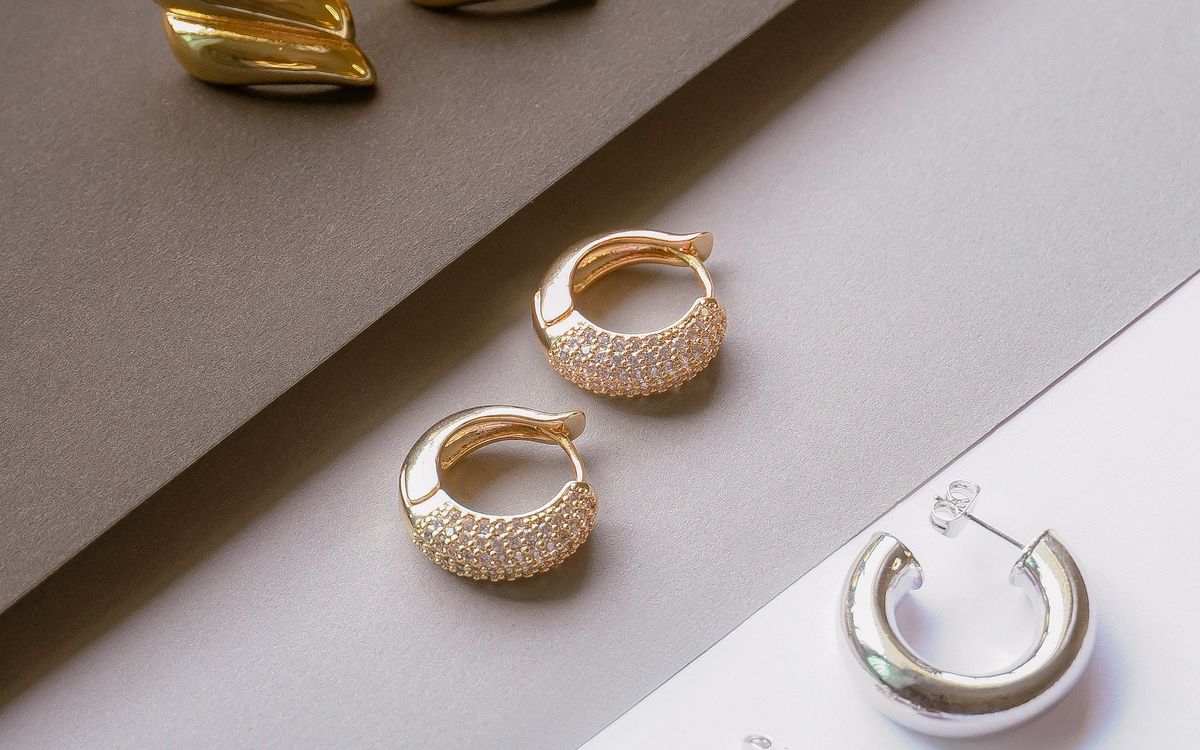
The old rule — never mix gold and silver — was never a law of metal; it was a shortcut, and it worked as a shortcut for a specific reason. For most of the twentieth century, jewelry was bought in sets and worn as sets, so a wrist carrying both metals suggested a wardrobe assembled from whatever was at hand. That context is gone. Most jewelry now is bought piece by piece, and mixed metals are a styling choice like any other. But the rule dissolved without being replaced, and the missing half is the interesting part: mixing metals is easy, mixing them well is a temperature problem and a dominance problem, and both have workable solutions.
The old rule was a shortcut, not a law
It is worth saying plainly: nothing about gold and silver makes them incompatible. They do not chemically fight, wearing them together does not damage either, and no etiquette survives that once did. What the old rule was actually tracking is visual temperature — a mismatched combination looks accidental rather than styled — and temperature is manageable once you see it. So the modern position is not “mix freely” either. It is that the mix needs the same deliberate structure a single-metal stack needs, plus one variable single-metal stacks do not have.
Temperature zones: why some golds fight some silvers
Metals read warm or cool, and the mismatch that makes a mix look accidental is almost always a temperature clash, not a metal clash. Yellow and rose golds sit at the warm end. Polished silver, white gold, and platinum sit cool. Champagne and pale golds sit in between, which is why they blend with nearly everything. The common mistake is treating “gold and silver” as the two categories when the actual categories are warmer and cooler, because the metals themselves have internal range: an oxidized silver chain reads cooler than a bright polished one, and 22-karat yellow reads far warmer than a pale 9-karat. Two pieces can both be “gold and silver” and either harmonize or fight, depending on where each falls in temperature. The practical instruction is to mix within a temperature band: warm golds with warmer, softer-finish silvers, or cool whites with pale golds — rather than the hottest yellow against the coldest steel, which is the highest-friction combination there is.
Reading temperature at a glance
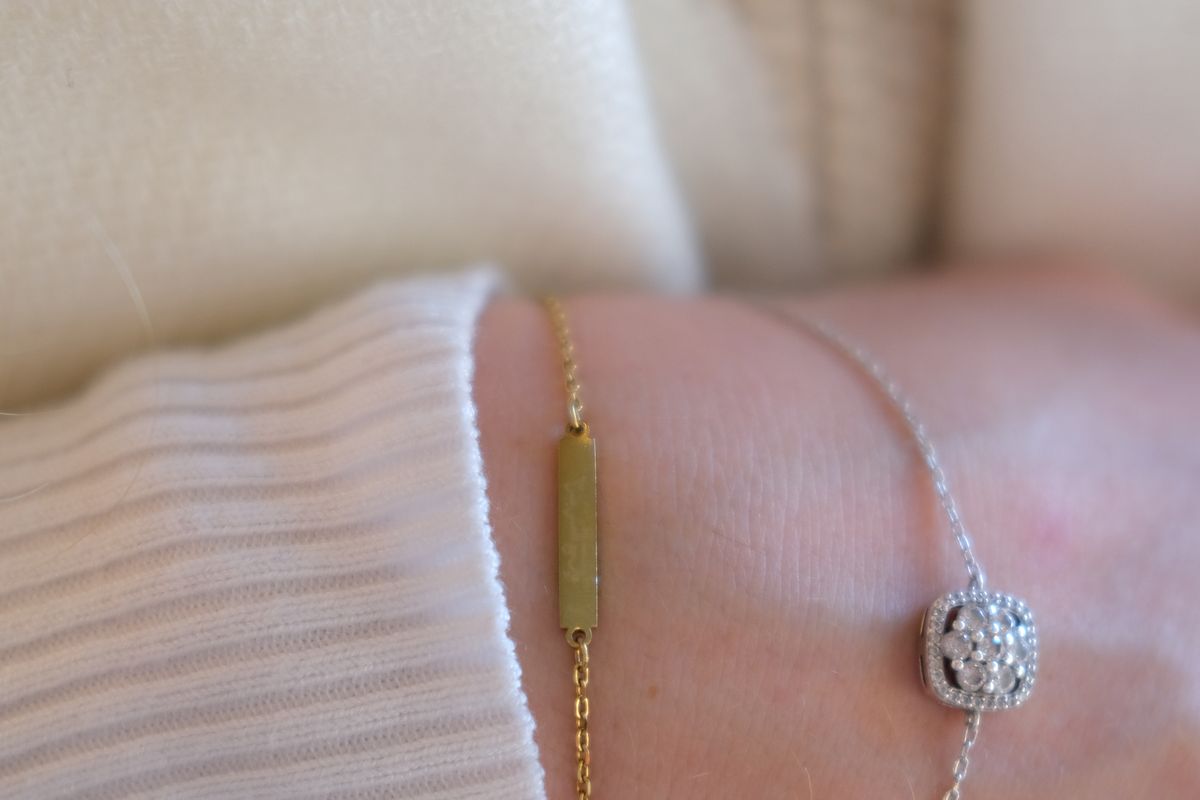
Judging a piece’s temperature is faster than it sounds: hold it near your skin or near a known-cool piece and watch which direction the contrast pushes. Bright polished surfaces read cooler than brushed or oxidized finishes of the same metal, so finish is often the real lever — a brushed silver next to yellow gold softens a clash that the same silver polished would sharpen. When a combination looks wrong but the metals seem reasonable, it is usually two high-polish finishes fighting, and changing one finish fixes what changing one metal would not.
The transition piece
The single most reliable tool in mixed-metal styling is a piece that contains both metals on one object. A two-tone watch is the classic — steel case, gold accents — and the category extends to rings with a silver body and a gold setting, chains built from alternating links, and bangles with inlaid contrast. What a transition piece does is structural: it puts both metals in one object, which converts the mix from two separate decisions into one. Once a two-tone piece is in the stack, every other gold-and-silver pairing reads as connected to it rather than as a coincidence. It also absorbs temperature mismatch, because a well-made two-tone piece has internal harmony built in by its designer. If you own only one mixed-metal trick, this is the one, and it works at every budget level — the construction matters more than the price.
Dominance beats symmetry
The second variable is proportion. Mixed metals read as deliberate when one metal clearly leads — the eye needs a dominant and a supporting cast, exactly the way mixed scales and layered lengths do. Symmetrical splits, half gold and half silver, produce the unresolved look that gave the old rule its credibility. Asymmetry is what makes it work.
The 70/30 split
The working default is the same ratio that governs mixed scale: roughly seventy percent one metal, thirty the other. Silver pieces supporting one gold statement, or the reverse. The dominant metal is usually whatever your permanent pieces are — the ring you never take off, the daily chain — and the minority metal gets added around it. What the split does not mean is counting pieces literally; it means the eye should be able to answer “which metal leads here” in one glance. If the honest answer is “both, equally,” the mix reads unresolved regardless of how expensive either half is.
Stacked zones: rings and wrists
Rings and wrists are where mixed metals get the most practice, because stacking naturally accumulates pieces of different origins. On the fingers, the reliable pattern is zones rather than alternation — gold cluster and silver cluster with a transition ring at the boundary, rather than alternating gold-silver-gold down the hand, which reads patterned rather than styled. On the wrist, a mixed stack works best with a temperature logic: whichever metal is dominant holds the center position, and the minority metal sits at the edges. Alternating strictly, again, turns the stack into a checkerboard. And the same construction caution applies that applies to any stack: harder pieces chew softer finishes over time, so the vermeil explainer is relevant reading before a plated piece gets parked next to polished steel every day.
What the metal constructions have to do with it
Mixed-metal styling mostly involves base-metal reality: most affordable “gold” and “silver” in a stack is a construction — plating, vermeil, gold-filled — rather than solid karat gold or fine silver, and the constructions have different wear lives. Under the FTC Guides for the Jewelry, Precious Metals, and Pewter Industries, gold-filled means a mechanically bonded layer of at least 10-karat gold constituting at least one-twentieth of the article’s weight, and vermeil means sterling silver plated with gold of at least 10-karat fineness at substantial thickness. The styling consequence is simple: a mixed stack that gets worn daily ages at the speed of its weakest plating, and a silver-toned vermeil piece will eventually reveal its sterling base at high-contact points while a solid silver neighbor just dulls. Mix constructions knowingly — durable constructions on the pieces that take friction, gentler finishes on the quiet slots — and the stack ages gracefully instead of unevenly. The metals guides cover each construction in depth.
The two-temperature habit: making the mix permanent
For people who commit to mixing rather than treating it as an occasional experiment, the workable long-term approach is a two-temperature wardrobe with a permanent bridge. Keep warm and cool pieces organized by temperature band rather than by metal name, buy new pieces with the band in mind — asking “warm, cool, or in-between” before “gold or silver” — and own one or two transition pieces that anchor whatever combination the day produces. The pieces that make mixed metals look accidental are rarely the extremes; they are the middle-weight, mid-temperature pieces bought without a band in mind. Get the temperature organization right and the dominance split mostly takes care of itself, and the fifty-year-old rule finally becomes what it should have been all along: a styling option with a method, not a prohibition. For how mixed metals and mixed scales read in full outfits, the styling desk keeps the running versions of these rules.
Frequently asked
Is it still considered wrong to mix gold and silver jewelry?
No. The separation rule has faded from mainstream styling for years; what replaced it is organization, not avoidance. Mixed metals read as deliberate when one metal dominates and the temperature of the pieces is consistent — and as accidental when neither is true.
What is a transition piece in mixed-metal styling?
A single piece that contains both metals — a two-tone watch, a ring with a silver body and gold setting, a chain built from alternating links. It legitimizes the mix by putting both metals on one object, and it anchors the rest of the stack.
Which gold looks best against silver?
Pale and champagne golds sit closer to silver in temperature and blend more easily. Deep yellow golds create the strongest contrast, which works when the contrast is intentional and balanced with a two-tone piece or a clear dominance split.