Layering necklaces without the tangle: lengths, weights, and the one rule

Every layered-necklace photo looks effortless, and every first attempt at layering ends the same way: two chains fused into one knotted strand by lunchtime. The tangle is not a coincidence or a curse. It is physics — two chains of similar length and similar weight competing for the same point of contact. Once you treat length, weight, and chain texture as the three variables they are, the system stops fighting you.
The one rule: two inches between layers
The single rule behind every other tip here: keep at least two inches of length difference between adjacent chains. Two chains an inch apart will drift together on the neck and interlock within the hour. Two chains three inches apart sit in different zones — one at the collarbone, one below it — and mostly stay where they start.
The standard three-layer ladder that works on most necks: 16 inches as the anchor, 18 inches as the middle line, and 20 to 22 inches for the drop. If you have a shorter neck or a higher neckline to clear, shift the whole ladder down: 14, 16, and 18. The absolute numbers matter less than the gap — measure a chain you own, find where it sits, and build the ladder around that.
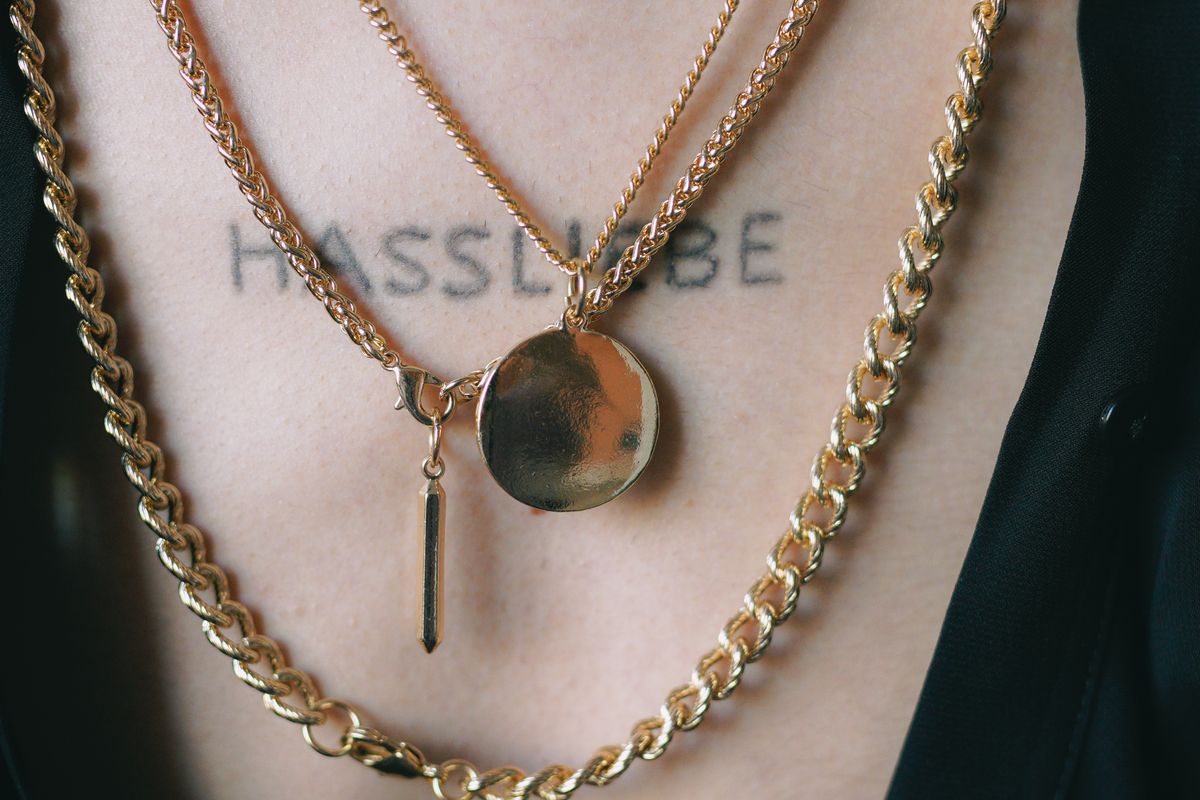
Weight is the second variable nobody mentions
Two chains of different lengths can still tangle if one is feather-light. A thin 16-inch cable chain will drift into and wrap around a heavier 18-inch snake chain, because the light chain moves with every head motion while the heavy one stays put. The fix is to put the visual weight where the separation needs to be: a pendant, a slightly heavier chain, or a locket at one layer gives that chain enough mass to hold its zone.
This is also why the classic layering formula — one chain with a pendant, one bare chain — works so reliably. The pendant is doing mechanical work, not just decorative work. It anchors its layer the way a heavier hem anchors a shirt.
Vary the chain texture, not just the length
Two identical chain styles will seek each other out and braid together, even with a proper length gap — snake chains in particular behave like they are magnetized to each other. Rope, cable, bead, paperclip, and herringbone chains all move differently, and mixing textures both looks better and physically reduces the wrap-around problem. If your two favorite chains are the same style and you insist on wearing both, one of them gets a pendant or a short pendant extension to keep its distance.
Necklines change the math
The ladder you pick should clear the neckline you are wearing. A crew neck needs everything above or below the collar — 14 and 16 inch chains, or push the drop chain to 24. A V-neck wants the layers to echo the V, which usually means 18 and 22. A square neckline tolerates almost anything because it gives the chains a straight horizon to sit against. Scoop necks are the most forgiving neckline in jewelry and the reason scoop tops photograph so well with layers.
The one neckline that resists layering is the high halter. There is no collarbone zone to work with, and every chain ends up in the same spot. On halter days, one chain beats three.
Turtlenecks and mock necks deserve their own note, because they invert the rule: the neckline does the job a short chain would do, so the ladder starts lower — 20 and 24 inch chains sit against the knit better than 16-inch lines buried in the collar. Winter dressing is the one season where longer chains outperform the classic ladder.
Clasps, extenders, and the morning routine
Two practical tools make the system stick. A set of chain extenders — one to three inch bars with a clasp on each end — turns any two chains you own into a properly gapped pair, which matters more than buying new chains. And if you layer the same set daily, a stacking clasp (one clasp with multiple rings) lets you fasten the set once and put it on as a single piece; the layers keep their relative positions all day, which is most of the battle.
The morning routine that avoids the evening knot: put the longest chain on first, then the middle, then the shortest. Reverse the order at night. Chains removed in the wrong order — shortest first — pass directly through the layers still around your neck, which is how day-old knots form in the first place.
If a knot does form, work it out with two pins on a flat surface rather than pulling — pulling a knot tight against a thin chain is how thin chains break. And when a tangle does claim a victim, the metals guides cover what a break at the clasp usually means for repair.
What to buy first
If you are starting from zero, buy the two-inch gap before you buy any chain: one 16-inch and one 18-inch chain in the same metal, one of them with a pendant. That single pair demonstrates the whole system — length gap, weight contrast, texture difference — and everything else you add later is a variation on it. For the metal choices that keep a layered stack looking matched rather than mismatched, the vermeil explainer covers which constructions age together; and for what this looks like in a full outfit context, the styling desk keeps a running edit.
Frequently asked
How many necklaces should you layer?
Two or three. Two is the easy default — one short, one long. Three works when the middle chain carries a pendant that visually separates it. Past three, most necklines start to look cluttered rather than layered.
What lengths work for layering?
Keep at least two inches between chains. A common three-chain set is 16, 18, and 20 to 22 inches; on shorter necks, 14, 16, and 18. The gap is what keeps each line visible and un-tangled.
Do chain styles matter when layering?
Yes. Two snake chains will wrap around each other all day; a rope next to a snake will not. Vary the chain texture between layers as deliberately as you vary the length.