Three strap upgrades that change the watch you already own
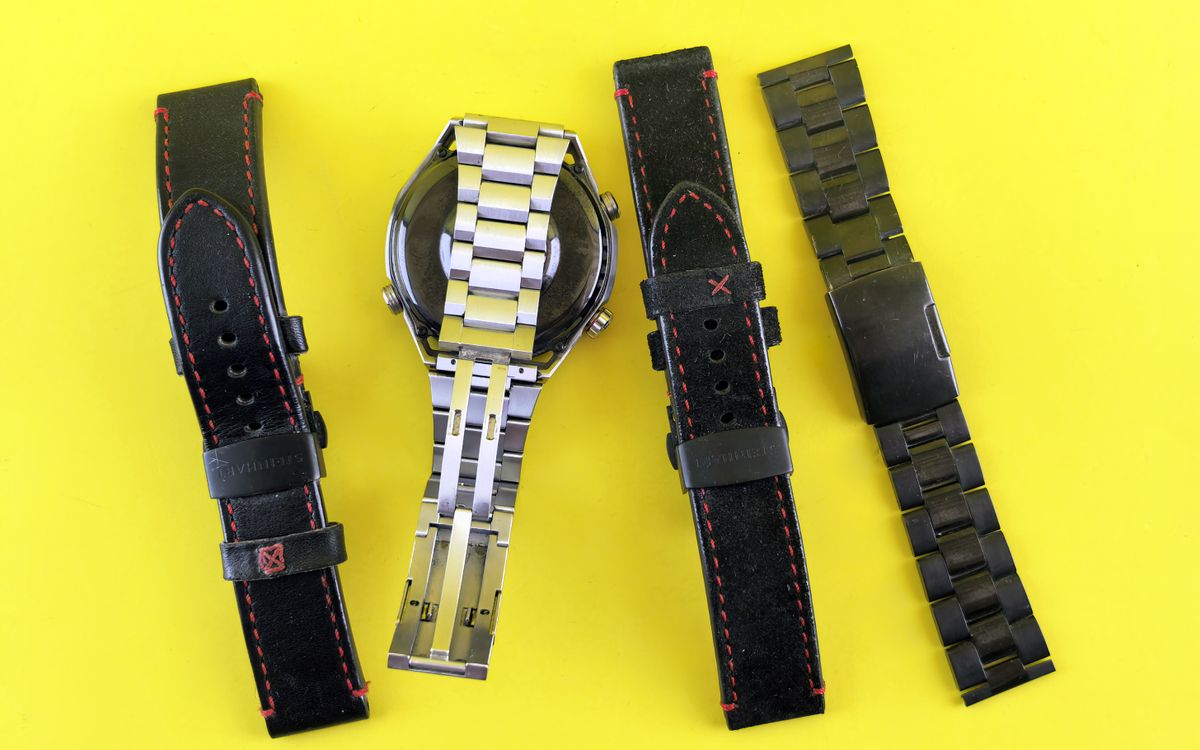
No other change transforms a watch as completely for as little money. A $27 strap makes a $85 watch read formal; a solid steel bracelet makes a resin-strapped dive watch feel like a different object entirely; and a better hide on a strap you look at every day is the difference between a wrist that seems finished and one that seems assembled. Unlike any other watch purchase, the upgrade is reversible, needs no service, and takes about two minutes.
Why the strap is the highest-leverage change
The case, the movement, and the crystal are the parts of a watch you cannot change; the strap is the part you can, repeatedly, for a fraction of the watch’s price. That asymmetry is worth exploiting deliberately. A strap choice changes the context a watch belongs in — the same diver on woven nylon belongs at a pool and on leather belongs at dinner — and it changes the wearing experience more than any dial does, because the strap is what touches skin all day.
It is also the lowest-risk purchase in watchmaking. A strap that disappoints costs tens of dollars and ships back; a watch that disappoints costs hundreds and a return shipment in its own box. The market responds to that: strap specialists publish complete specifications — materials, widths, lengths, hardware — more reliably than many watch brands do, which makes this one of the few categories where the listing itself can be trusted after a check.
The market splits into three materials, and each one answers a different complaint. Leather answers formality — it is what a dress watch expects and what an office notices. Nylon answers indifference: a NATO-style strap shrugs off sweat, salt water, and summers. Steel answers weight and hardware: a bracelet with solid end links changes how the watch sits, how it sounds, and how long the attachment lasts. The three picks below take one from each camp, at prices from $27 to $60, all from makers or distributors whose listings state what is actually included.
Measure before you order
Lug width is the number that decides everything, and it is measured in millimeters between the inside edges of the two lugs — the horn-like protrusions where the strap meets the case. The fastest method is on the strap itself: most straps print their width on the underside of the leather or the metal of the buckle hardware. Otherwise, a metric ruler across the gap between lugs settles it. Standard widths run 16 to 24 millimeters, and most dive watches sit at 20, 22, or 24.
Width is not the only check for a bracelet. Steel bracelets carry end links — the first links that meet the case — and those end links are either straight or curved to hug specific case shapes. A bracelet made for one watch family may leave gaps on another, and gaps collect dust and read as cheap. The makers below state their fit targets plainly; read them before ordering rather than assuming a width match is enough.
The picks
All three picks were checked against maker and distributor listings in November 2026. Strap prices move less often than watch prices, but widths and lengths sell out individually, so check that your exact size is in stock.
Strapcode Super-O Boyer 22mm Stainless Steel Bracelet for Seiko SKX007 SKX009 SKX011 — the bracelet pick
Strapcode’s Super-O Boyer is the bracelet that taught a generation of Seiko owners what their watches were missing. The maker’s product page specifies 316L stainless steel throughout, solid links with solid curved end pieces shaped for the SKX007, SKX009, and SKX011 diver cases, screw-fixed links instead of press pins, a taper from the 22 mm lugs down to a 20 mm buckle, and a double-lock diver’s clasp with push button — at $59.99. The listing also includes a pair of 2.5 millimeter fat spring bars for a more secure connection than the generic pins most watches ship with.
The trade-offs are the ones steel always brings: weight — this bracelet adds roughly a hundred grams to the wrist — and sizing, which on this bracelet means a small screwdriver for the link screws rather than a push-pin press. The fit targets are specific on purpose. If your watch is one of the listed Seiko divers, or one of Strapcode’s other model-specific bracelets covers yours, the match is precise; if your watch is an odd shape, buy leather or nylon instead.
Hirsch Kansas Buffalo Grain Calfskin Watch Strap — the leather pick
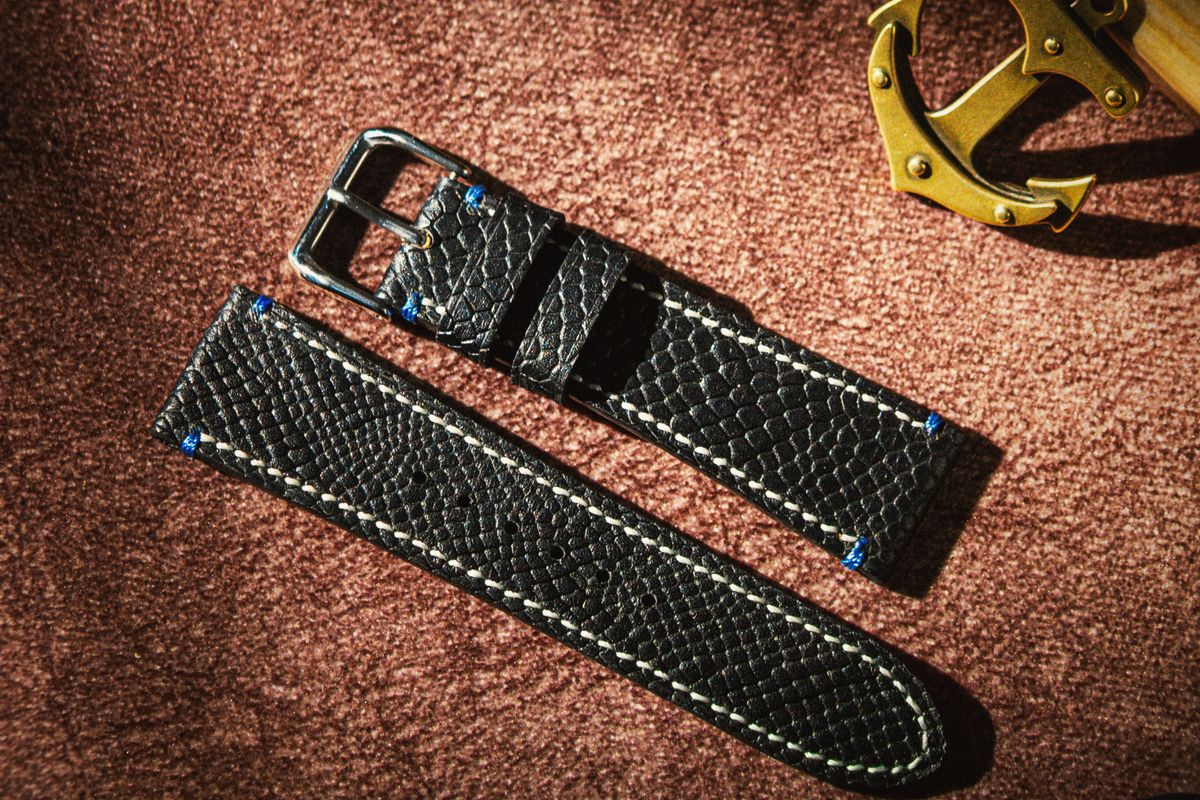
Hirsch has made watch straps in Austria since 1928, and the Kansas is the collection’s workhorse: buffalo-grain calfskin with a texture that stays legible through years of daily wear, listed by Hirsch’s US distributors — Graham International and Strapped For Time — at $59.95. Buffalo grain hides wear differently from smooth calfskin: small scuffs disappear into the grain instead of reading across it, which is exactly what you want in a strap that meets desks, sleeves, and door frames daily.
The honest gap in the listing is information: the distributors publish the leather and price but not the full spec sheet Hirsch’s own store carries, so confirm width and buckle finish on the product page before ordering. What the price buys is a tier of leather, stitching, and edge finishing that mass-market straps at half the money visibly lack — and that outlasts them by years. It is the pick for a dress watch or an everyday watch whose original strap has already aged out.
Barton Black Nylon NATO Style Watch Band — the utility pick
Barton’s NATO-style band is the cheapest meaningful upgrade in this guide, at $27 on the maker’s own site, and the most weatherproof. The maker specifies woven nylon in widths from 16 to 24 millimeters, standard 10-inch and long 11-inch lengths, and a one-piece design that threads under the watch and through its own keepers — so there are no spring bars to compress with a tool if you start from a NATO setup. Adjusting an over-long strap is a fold-back through the loop, or a trim and heat-seal.
The trade-off is formality: a NATO strap reads casual in every context, and its one-piece design lifts the watch case off the wrist slightly — a few millimeters that some wearers notice and others like. What it buys is indifference to abuse: sweat, salt water, rain, and sunscreen all wash off with tap water, and a strap that survives a summer at the beach costs less than lunch to replace. It is the pick that makes a watch wearable on days you would otherwise leave it home.
Steel: weight, hardware, and end links
Steel changes the object’s physics. A bracelet distributes weight across the wrist, holds the case in one position through a full day, and outlasts every strap material by a decade or more — but it demands the right hardware, and the hardware is where cheap bracelets fail. Press pins loosen and rattle; floating end links leave gaps that collect grit; folded sheet-metal clasps wear at the hinge. Solid links, fixed end pieces, and a machined clasp are the three upgrades that separate a $60 bracelet from a $20 one, and they are exactly the three the Super-O Boyer specifies.
Sizing is the other cost. Screw-fixed links need a small screwdriver and ten patient minutes; pin-held links need a press or a careful hammer tap. Neither is difficult, but both reward doing it once, correctly, over a tray rather than over a tile floor.
Leather: what better hide buys
Leather is the material where price visibly becomes quality. A basic strap is die-cut from thinner hide, edge-painted rather than finished, and stiffens within a season; a better strap — the buffalo-grain tier of the Kansas pick — is cut from thicker hide whose grain absorbs daily scuffs, stitched rather than glued at the stress points, and wears in instead of wearing out. The difference shows up in the second year, not the first, which is why cheap leather looks like a bargain and isn’t.
Two details on a leather listing are worth more than the leather name. Taper — a strap that narrows from the lug width toward the buckle — keeps the watch sitting flat and drops visual weight under a cuff. And quick-release spring bars convert the strap from a semi-permanent choice into a wardrobe decision, which matters more on leather than on any other material because leather is the one you will want to swap seasonally.
Nylon: the utility option
Nylon’s virtue is that it changes nothing about the watch except whether you wear it. A NATO-style band is the one strap material that genuinely does not care about weather, sweat, or schedule — it dries in hours, washes in tap water, and costs little enough to own in several colors. The one-piece design also has a practical side: it holds the watch even if a spring bar fails, because the strap continues past the bar through the keepers.
The trade-offs are the lift and the look. A NATO raises the case a few millimeters off the wrist on a doubled layer of fabric, which some wrists love and others find tall. And it is permanently casual — no nylon reads formal, which is why it pairs best with tool watches and worst with the dress category.
The two-minute swap
Changing a two-piece strap takes one spring bar tool or a fingernail and a little patience. Compress the spring bar at one lug, lift the strap free, and repeat on the other side; then compress each end of the new strap into place until the bar clicks into the lug hole. Quick-release straps — Timex publishes them across its dress models — carry a small lever that does the compressing without any tool at all. NATO-style straps need one extra step: thread the strap through the spring bars before installing them, then pass the tail through the keepers.
Two habits prevent the only common accidents. First, work over a towel or a tray, because a dropped spring bar is a fifteen-minute search. Second, tug each end of the finished strap before wearing it — a spring bar that has not seated in the lug hole will hold for an hour and let go on the sidewalk.
What we left out and why
We left out rubber and silicone straps, which are excellent for dive watches but belong in a water-sports guide rather than an upgrade one. We left out the sub-$10 unbranded straps flooding marketplace listings, because the leather in them is frequently bonded rather than whole-grain, and the spring bars are the first thing to fail. And we left out maker-branded straps for specific watch brands that publish no prices on their own sites — if a maker will not state the price, this desk will not guess it.
For how these picks were checked, and what gets a product excluded, see How We Appraise; for the watches the straps go on, the watches hub collects the category’s guides.
The picks
Some links below are affiliate links — we may earn a commission at no extra cost to you.
Strapcode Super-O Boyer 22mm Stainless Steel Bracelet for Seiko SKX007 SKX009 SKX011
$59.99A model-specific bracelet that solves the end-link gap problem by design: 316L steel, solid curved end pieces, screw-fixed links, a 22-to-20 mm taper, double-lock diver's clasp, and 2.5 mm fat spring bars included — all stated on the maker's page.
Hirsch Kansas Buffalo Grain Calfskin Watch Strap
$59.95Austrian-made buffalo-grain calfskin from a strap house working since 1928 — the grain hides daily scuffs that read across smooth calfskin, and the hide tier outlasts mass-market straps by years.
Barton Black Nylon NATO Style Watch Band
$27.00The cheapest meaningful upgrade in the category: woven nylon in widths from 16 to 24 mm, standard and long lengths, a one-piece design that threads through the spring bars, and total indifference to sweat, salt water, and sunscreen.
Side by side
| Specification | Strapcode Super-O Boyer | Hirsch Kansas | Barton NATO Style Band |
|---|---|---|---|
| Material | 316L stainless steel | Buffalo-grain calfskin | Woven nylon |
| Widths | 22 mm, tapers to 20 mm | Not stated | 16–24 mm |
| Fastening | Double-lock diver's clasp, push button | Not stated | Buckle with keepers |
| Length | Max 175 mm | Not stated | Standard 10 in or long 11 in |
| Hardware notes | Screw-fixed links; 2.5 mm fat spring bars included | Not stated | One-piece design threads through spring bars |
| Price at last check | $59.99 | $59.95 | $27.00 |
Sources
- Strapcode product page — Super-O Boyer 22mm Stainless Steel Bracelet for Seiko SKX007 SKX009 SKX011 (strapcode.com), checked November 2026
- Hirsch Kansas Buffalo Grain Calfskin Watch Strap — price as listed by Hirsch US distributors Graham International (grahamintl.com) and Strapped For Time (strappedfortime.com), checked November 2026
- Barton Watch Bands — Black Nylon NATO Style Watch Band collection listing (bartonwatchbands.com), checked November 2026
Frequently asked
How do I measure my watch's lug width?
Measure the distance between the inside edges of the two lugs — the points where the strap attaches — in millimeters, either on the underside of the current strap or with a metric ruler across the case. Odd widths can be sized up by a millimeter with a soft NATO strap; quick-release straps need an exact match.
Will changing the strap damage my watch?
Rarely, and never if you go slowly. Spring bars compress with a tool or a fingernail and the risk is a scratched lug, not a broken watch. NATO-style straps thread through the spring bars, so they involve even less hardware handling than a two-piece strap.
Do steel bracelets fit any watch?
No — check three things before ordering: the lug width, whether the case has straight or curved lugs, and whether the bracelet's end links are shaped for your model. Bracelets made for specific watch families, like the Seiko diver pick below, solve the shape problem by design.