Watch sizing starts with lug-to-lug, not case diameter
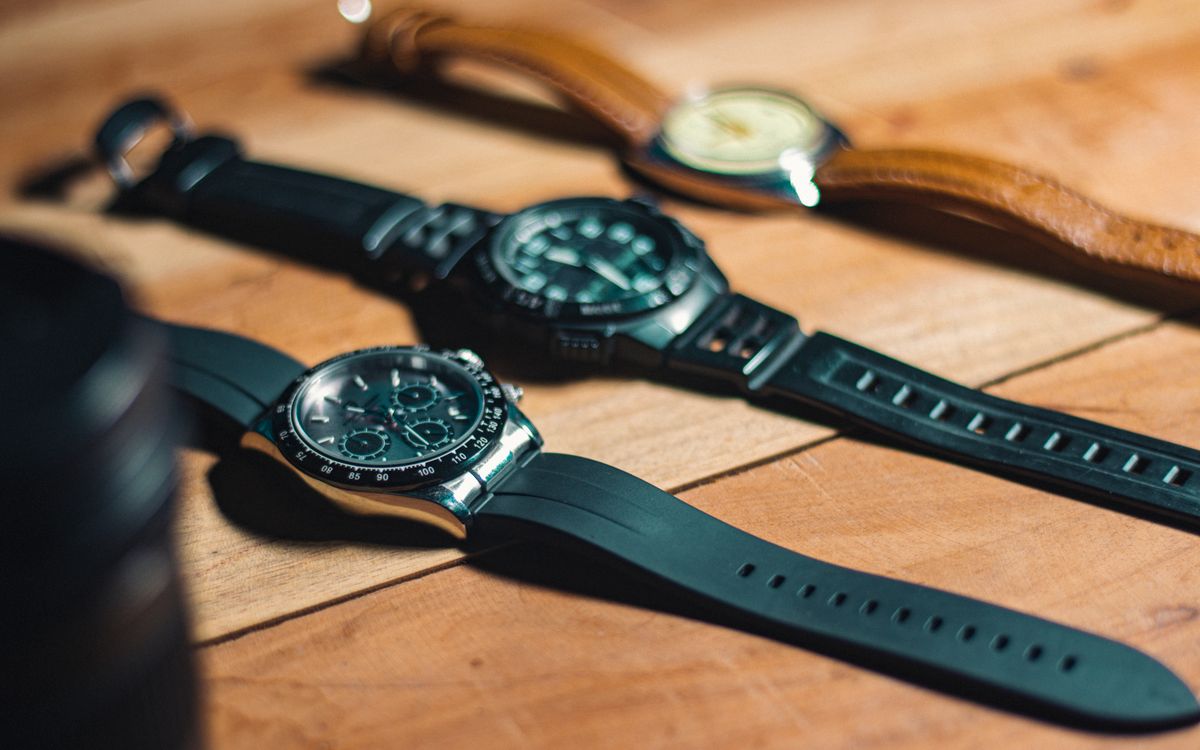
Watch listings lead with case diameter because it is the easiest number to compare. Two watches at 40mm look like equals in a spec table, and they will sit entirely differently on the same wrist. Fit is decided by several dimensions working together — diameter, lug-to-lug width, case thickness, and the strap that connects the case to your arm — and the ones that matter most are the ones listings mention least.
This page walks through each measurement, explains which one actually predicts whether a watch will fit you, and ends with a measuring routine you can run at home before ordering.
Diameter is the headline number, not the fit number
Case diameter — the width of the case measured across, excluding the crown — sets the general size class of a watch. Under 36mm reads classically small, 38 to 40mm is the current center of gravity for unisex and men’s watches, 42mm and up reads large, and anything past 44mm is a statement the wrist has to carry. That much is convention, and it is a useful first filter.
But diameter only tells you the size of the circle. Your wrist is not a circle — it is closer to an oval, wider across the top than the wrist bones are apart, and the watch spans the narrow dimension. Two 40mm watches with different lug structures can span very different widths from lug tip to lug tip, and that span, not the diameter, is what runs out of room first. This is why a 40mm watch on a small wrist can look like a bad fit while a 42mm one with short lugs looks right.
Lug-to-lug decides the fit
Lug-to-lug is measured from the tip of one lug to the tip of the opposite lug, across the full case. It is the single most predictive number for fit, because it answers a concrete question: does the case span your wrist, or does it overhang the edges and perch on top? A watch whose lug-to-lug equals or slightly under-runs your wrist width sits flat and straps wrap naturally downward. A watch whose lug tips extend past the flat of your wrist rocks on the strap and drags the buckle off center.
The practical rule is blunt: measure your wrist width across the top at the point you wear a watch, and match lug-to-lug to it. Makers who publish full specifications state lug-to-lug directly. If a listing gives only diameter, be cautious — on a round case, lug-to-lug typically runs about 10 to 12mm wider than the stated diameter, but curved lugs, short lugs, and integrated bracelet designs vary the real figure enough that guessing defeats the purpose.
Thickness changes how a watch wears
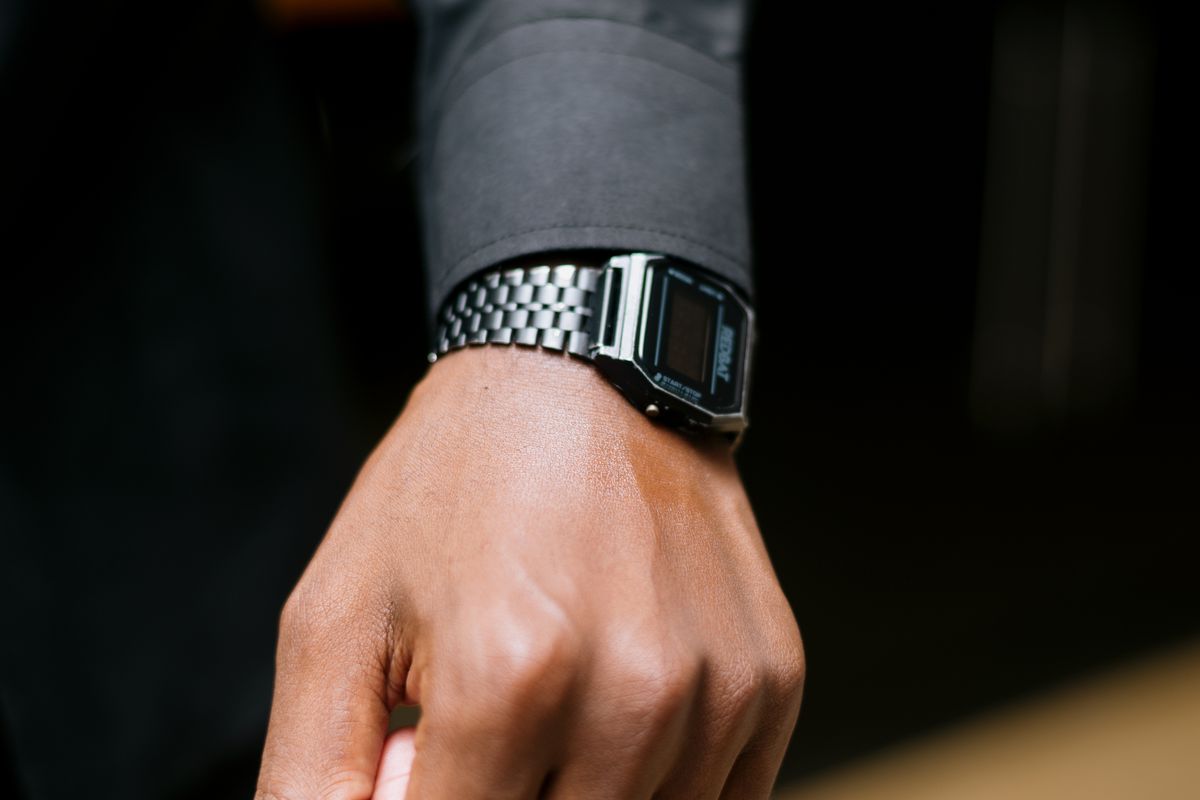
Two watches with identical diameter and lug-to-lug can still wear differently because of case thickness, measured from the caseback to the top of the crystal. Thickness decides three practical things. First, whether the watch clears a shirt cuff — a case over roughly 12mm starts fighting dress sleeves. Second, how much the watch rides above the wrist bone; tall cases catch on desks, jacket zippers, and door frames in daily use. Third, how the strap angles down from the case: a thick case forces the strap into a sharper drop, which on a small wrist can leave the strap hovering instead of touching down.
Automatic movements with date wheels and rotor winding tend to run thick; hand-wound movements and slim quartz modules run thin. Neither is better — a tool watch is allowed to be tall, and a dress watch is not. Just read thickness with your own wardrobe in mind.
Strap and bracelet length
The case gets the attention, but the strap is what actually holds fit together. Three things to check.
Metal bracelets
A metal bracelet needs enough links and enough micro-adjustment to fine-tune fit through the day, because wrists change size with heat, exercise, and weather. Well-made bracelets put a micro-adjust slot in the clasp itself — a few millimeters of tool-free adjustment that covers most day-to-day drift. When sizing, remove links symmetrically from both sides of the clasp so the watch head stays centered over the wrist bone.
Leather, rubber, and fabric straps
Quick-release spring bars have made strap swapping trivial, which changes the sizing math: a strap that runs slightly short on one watch may be perfect on another, because lug width and case thickness both shift where the buckle lands. Standard strap lengths are built for wrists roughly 16 to 19cm; if you are outside that band, check the strap’s stated length before assuming it will close.
Where the buckle should land
A correctly sized watch closes with the buckle hole in the middle third of the strap, not the last hole. If you are riding the final hole on day one, the strap is short for you and will feel tighter in summer. This matters more than it sounds, because a too-short strap drags the case off center no matter how good the lug-to-lug match is.
A measuring routine you can run before ordering
You need only a soft tape or a strip of paper and a ruler. Take two measurements. First, wrist circumference: wrap the tape just past the wrist bone, snug but not tight, and note the millimeters — this sizes straps and predicts how much slack a bracelet needs. Second, wrist width: measure straight across the top of the wrist at the point the watch sits. Compare that figure to the listing’s lug-to-lug. If the case spans your wrist width or comes in a millimeter or two under, the watch will sit flat. If it exceeds your width, order something else — no strap trick fixes an overhanging case.
If a listing publishes none of these figures beyond diameter, treat that as information about the seller, not just the watch.
Rough pairings by wrist size
The pairings below are starting points, not rules — lug-to-lug and thickness override them when the numbers are published.
| Wrist circumference | Comfortable case diameter | Lug-to-lug to look for |
|---|---|---|
| 14 to 15 cm | 34 to 38 mm | up to about 44 mm |
| 15.5 to 17 cm | 38 to 40 mm | 44 to 48 mm |
| 17.5 to 19 cm | 40 to 42 mm | 48 to 52 mm |
| over 19 cm | 42 mm and up | 52 mm and up |
A 15cm wrist wearing a 42mm case with a 52mm lug-to-lug is not a matter of taste — the case physically overhangs and the strap drops vertically off the lugs. The table works in reverse too: a 19cm wrist in a 36mm watch can look under-dressed, though it will at least sit flat.
When the measurements split the difference
Real watches rarely land exactly on the ideal numbers. When you are between two sizes, weight the lug-to-lug match first, thickness second, and diameter last. A watch that spans your wrist correctly but is a size smaller in diameter than convention suggests will almost always wear better than the reverse. And if you are choosing between two straps for a watch you already own, the strap that lets the buckle land mid-strap wins over the one with more slits to spare.
Getting the fit right is the cheapest improvement available in watch buying — it costs nothing except a tape measure. If you are still comparing watches by spec sheet, our watches guides cover the rest of the numbers that matter, and if you are sizing a ring alongside, the same soft-tape routine appears in the ring size guide with the finger-specific adjustments.
Frequently asked
What size watch case should I wear?
There is no single right diameter. A 40mm case can wear small on a 19cm wrist and large on a 15cm one, because the case occupies a fixed diameter while wrists differ in width. Check lug-to-lug against your wrist width and the case will nearly size itself.
How do I measure lug-to-lug on a watch?
Measure from the outer edge of one lug tip to the outer edge of the opposite lug tip, straight across the case, in millimeters. Makers publish this figure in the specifications of well-detailed product pages; if a listing gives only diameter, the lug-to-lug usually runs about 10 to 12mm wider on a round case.
Does case thickness matter as much as diameter?
It matters for how a watch fits under a cuff and how far it rides above the wrist bone. A thick case with an automatic movement can stand noticeably off the wrist even at a modest diameter, while a slim hand-wound case at the same width disappears under a shirt cuff.