Chain styles explained: what cable, rope, snake, herringbone, and figaro each do
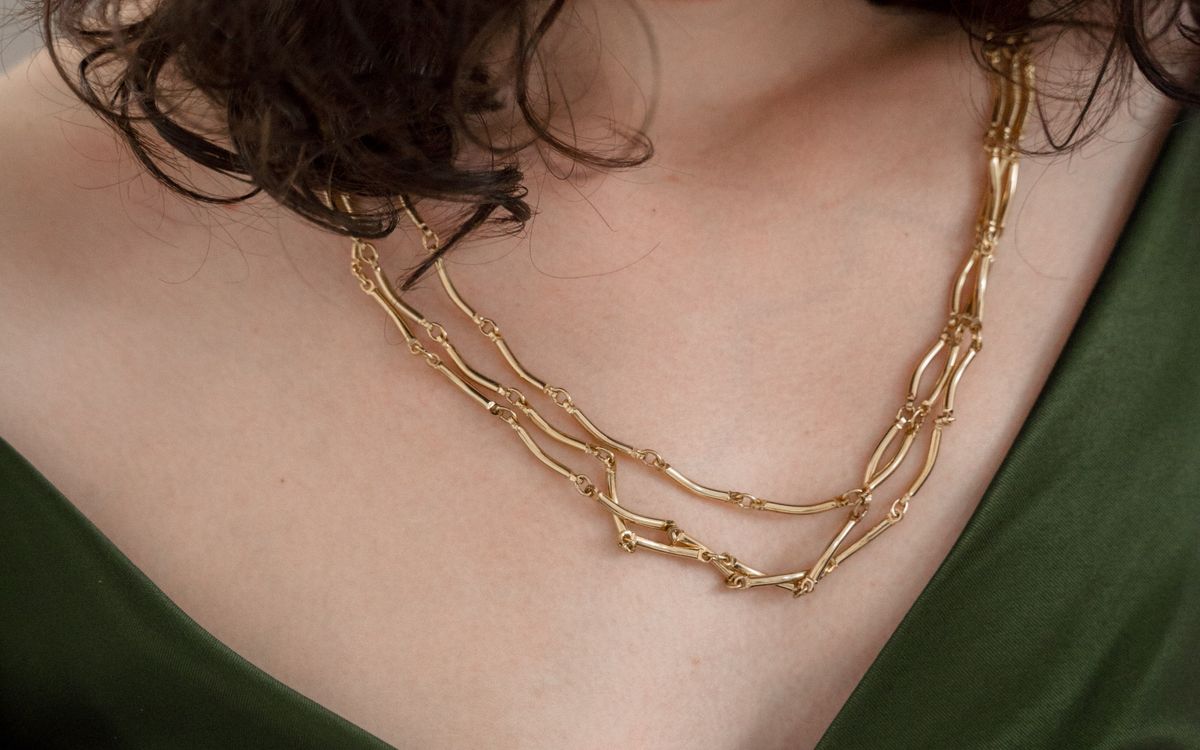
Every chain listing eventually names its link style — cable, rope, snake, herringbone, figaro — and most buyers read those words as flavor text. They are not. The link construction determines how the chain drapes on the neck, how it survives being caught on a sweater, whether a pendant hangs straight, and whether a kink at the wrong angle ends the piece. Two chains of the same karat and length can differ by years of usable life purely because of how their links were built.
This page walks through the five constructions you will see most often, what each one is genuinely good at, and how to match the style to what you plan to do with it.
Cable: the construction every other chain is measured against
Cable is the chain people draw when asked to draw a chain: a series of uniform round or oval links, each passing through the next. Because every link is identical and independently movable, the chain flexes in all directions, drapes flat against the chest, and shrugs off the small twists of daily wear. It is also the easiest style to repair — a jeweler can replace a single damaged link without disturbing the rest.
The trade-off is visual. Cable is quiet. It reads as a chain, not as a design, which is exactly why it is the default recommendation for pendants: the bail slides, the pendant hangs centered, and nothing about the chain competes with what hangs from it. If a listing does not say otherwise, assume a pendant was designed for a cable.
Rope: twisted links that read as texture
Rope links are twisted into a spiral before assembly, so the finished chain shows a diagonal rope pattern that catches light along its length. Structurally that twist is an advantage: load is shared across several link surfaces instead of one, and rope chains in solid gold routinely outlast the same width of cable. It is the construction most often chosen for pieces meant to be worn alone and worn hard.
Rope works with pendants more than its reputation suggests, with one condition: the pendant should have some visual weight of its own. A small, delicate charm on a heavy rope looks unbalanced, and the twisted links keep the bail from sitting flush. On a wider rope, use a bail large enough for the links to pass through.
Snake and herringbone: the liquid chains
Why snake chains kink
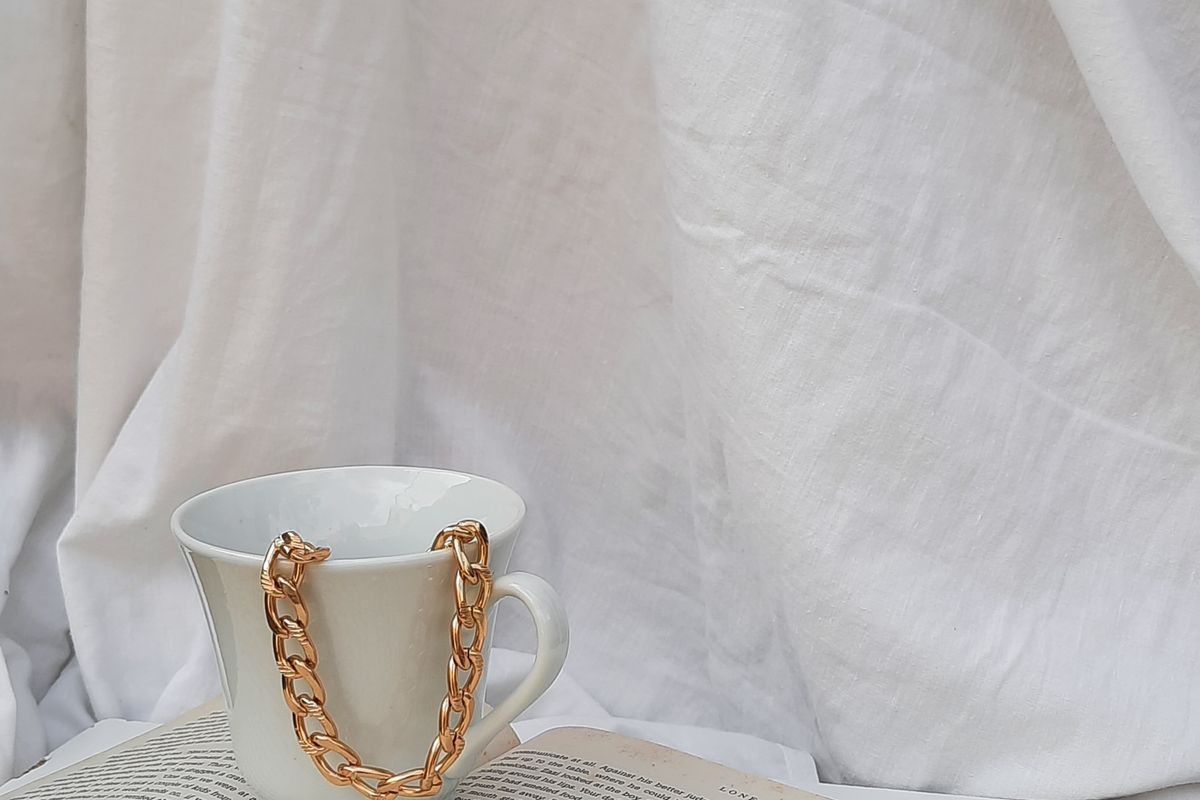
A snake chain is not made of visible links at all. It is a row of round metal plates — often just wavy discs — threaded tightly onto a flexible core, which is what gives the chain its smooth, almost liquid surface. That construction drapes beautifully and feels sleek against skin, but the plates have no slack: bend the chain sideways, and the plates stack into a sharp ridge that will not flatten again. A snake chain can carry a small slide pendant, but it should never carry weight, and it should always be stored hanging or lying straight.
Why herringbone is the most fragile of the five
Herringbone goes further: flat, chevron-patterned links are laid side by side and soldered into a continuous flat ribbon. The result is the most dressy surface of the five and the least tolerant of daily life. Any fold — a crease from a collar, a twist at the clasp, a grab from a child — puts a permanent bend across multiple flat links at once. Herringbone chains are priced and built as occasion pieces. Wearing one every day, or hanging any pendant from it, is the most common way this style dies early.
Figaro: the pattern chain with Italian roots
Figaro alternates groups of short round links with a single long link — the classic rhythm is three short, one long — a pattern that comes from Italian chainmaking and is named for the opera couple rather than anything romantic. The long links give the chain a visible rhythm and make it sit slightly flatter than a plain cable of the same width, which is why Figaro is the style people pick when they want a chain that reads as a deliberate design without pendants.
Durability is close to cable: the round links behave like cable links, and the long links add flexibility rather than weakness. The one practical caveat is that the long links are the section a catch or snag will find first, and replacing one changes the pattern visibly. Figaro carries pendants acceptably, though the pattern shows around a small bail.
Strength compared: what daily wear actually does
Across the five styles, the hierarchy in ordinary use is fairly consistent. Rope leads, because its twisted links share load. Cable follows, simple and repairable. Figaro sits beside it, losing small points for its long links. Snake and herringbone trail far behind — not because their metal is weaker, but because their flat or tightly packed surfaces have no give when bent. A karat stamp tells you what the chain is made of; the link construction tells you how long it will stay intact.
Two practical notes follow from that. First, the thinner the chain, the more the construction matters: a 1 mm cable snaps under a catch that a 2.5 mm rope shrugs off. Second, clasps kill more chains than links do — check that the clasp size is proportionate to the chain and that a spring ring or lobster claw operates smoothly before you commit.
Pairing chains with pendants
The pendant question has a short answer: cable first, rope second, figaro tolerantly, snake and herringbone not at all. Cable gives a pendant a neutral frame and lets the bail hang straight. Rope frames a substantial pendant well and adds its own texture around a larger stone. Figaro suits lockets and medallions whose weight matches the pattern’s visual weight. Snake can manage a small sliding bead; herringbone should stay alone.
If you are building up several chains to wear together, the same logic applies vertically: the constructions that take pendants belong at the bottom of a stack, while flat styles sit higher against the collarbone where nothing tugs them. Our guide on layering necklaces for daylight covers the spacing in more detail.
The checks at the clasp before you order
Before ordering any chain, three checks cost nothing. Read the karat stamp — 14k or 18k on a solid gold chain, usually on the tag near the clasp — and treat a missing stamp on a piece described as solid gold as a question for the seller. Confirm the clasp type and that the listing states the chain’s width in millimeters, because width is the single biggest driver of both price and durability. Finally, match the construction to the job: if the chain exists to hold a pendant, order cable; if it exists to be worn alone, rope and figaro earn their keep, and herringbone should be bought knowing it lives carefully.
For the metal side of the same decision — vermeil, gold-filled, and plated versus solid — see our breakdown of gold vermeil and plated constructions, and for more buying frameworks, the buying guides collection is the hub.
Frequently asked
Which chain styles hold a pendant without twisting?
Cable and rope chains carry pendants most reliably. Their round or oval links flex in every direction, so the chain drapes naturally and a bail can slide without catching. Flat constructions such as herringbone and snake resist a pendant visually and structurally, because the added weight tends to make them kink.
Can a kinked snake or herringbone chain be repaired?
Sometimes. A jeweler can often work a single kinked section back into shape on a snake chain, but a herringbone kink usually breaks the flat links' alignment permanently at the fold. Repair is fiddly and not always successful, which is why both styles are sold mostly as standalone pieces rather than pendant chains.
What is the strongest chain style for daily wear?
Rope chains are generally the most durable of the five common styles because their twisted links share load across several contact points. Cable is a close second and easier to repair. The weakest everyday performers are herringbone and snake, whose flat surfaces deform when bent the wrong way.