Three everyday stud earrings, compared by stone and construction
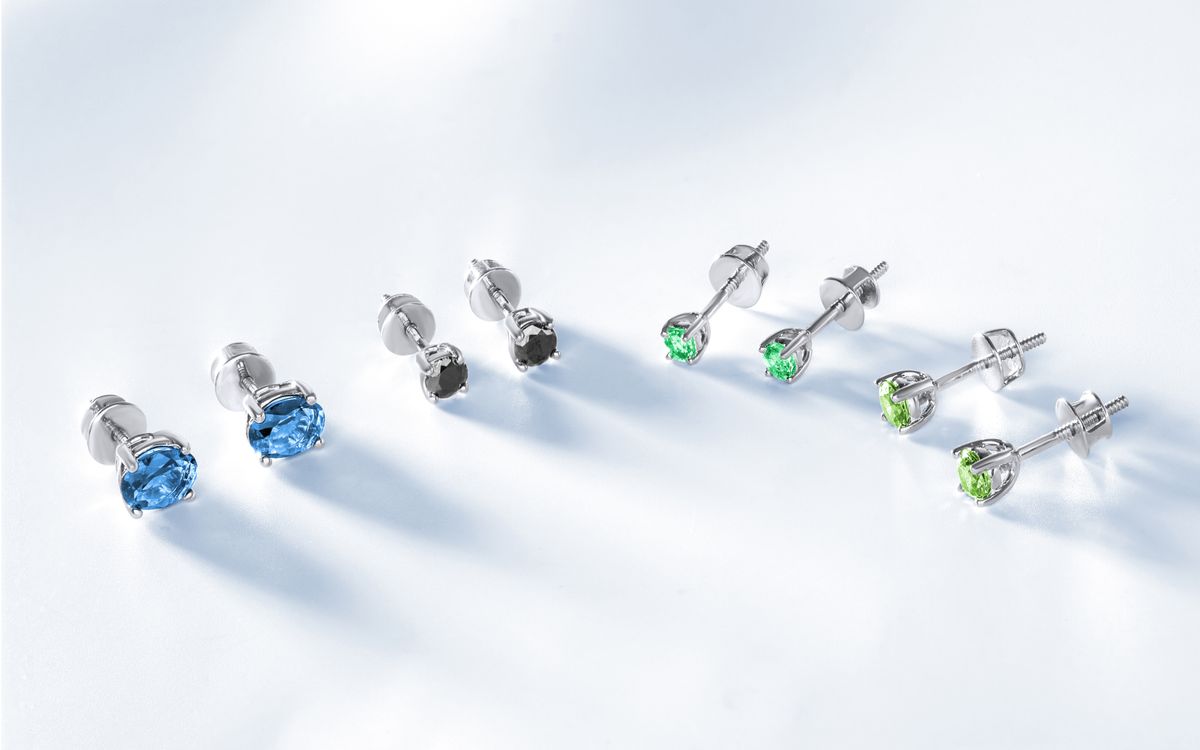
Studs are the least dramatic purchase in jewelry and the one most people regret least — provided the first pair is chosen well. The daily stud survives sleep, hairbrushes, headphones, and being forgotten for weeks at a time. Three variables decide whether it does that comfortably: what the stone and metal actually are, what holds the stud against the lobe, and whether the listing is for one stud or two. Price tags across brands are often not comparable until that last variable is resolved.
This guide compares three real, in-production studs from Mejuri, Missoma, and Gorjana — a lab-grown gemstone stud, a pearl stud, and a solid gold flat-back stud. All three were checked against the makers’ own US product pages in November 2026, and the prices below are the US site prices as listed there.
What an everyday stud has to survive
A stud worn daily faces demands that occasion studs never meet. The stone or dome takes brushing contact every time hair is tucked behind the ear. The backing works against skin oils continuously, and skin oils loosen threaded mechanisms over months. And the whole assembly must be light enough to be forgotten — the Missoma pick below weighs 0.68 grams per stud, and that lightness is why it disappears into a routine.
The failure modes are predictable. Stones fall out of loose settings, which is why bezel and collet settings age better than high prongs on daily wear. Butterfly clips lose tension, which is why flat-back posts have become the comfort standard. And plating on high-contact surfaces wears first, which is why the material line — vermeil over silver, or solid gold — is the first thing to read on any listing.
The material lines at these prices
Between roughly $90 and $110 per unit, three constructions dominate the everyday stud market, and each pick below represents one.
Gold vermeil with a lab-grown stone is Mejuri’s construction: the maker’s material pages state 2.5 microns of 18k gold over a palladium barrier on 91% recycled sterling silver, and its lab-grown gemstones are described as sharing the same physical and chemical properties as natural ones. For a daily stud, the stone’s hardness is the practical point — a lab-grown sapphire resists the everyday scratching that softens plated domes.
Vermeil with a pearl is Missoma’s: 18k recycled gold vermeil on recycled sterling silver, with cultured freshwater pearls sourced through Responsible Jewellery Council certified suppliers per the maker’s page. Pearl is the soft stone in this comparison — it rewards care rather than neglect — and it is the only pick here with an organic material on the contact surface.
Solid gold with a flat back is Gorjana’s: 14k solid gold with a threaded flat-back post per the maker’s listing. No plating to wear, no layer to thin — the construction that ends the material conversation entirely, at a price that has come down into vermeil territory for simple designs.
The picks
All three picks were checked against the makers’ US product pages in November 2026. Prices move, and two of the three are priced per single stud, so read the listing language before comparing.
Mejuri Round Lab Grown Sapphire Studs — the gemstone pick
Mejuri’s Round Lab Grown Sapphire Studs are the stone-forward pick: a 4 mm lab-grown sapphire on the maker’s 18k gold vermeil construction, listed at $98 on the maker’s US site. The listing states the stud is sold individually, so a matched pair runs $196 — a detail that surprises buyers comparing against pair-priced competitors. The maker’s material page states that lab-grown gemstones share the same physical and chemical properties as natural ones, which is the entire argument for sapphire here: at 4 mm and set low, it is a stone that shrugs off decades of contact. The piece carries the maker’s two-year warranty and free 30-day returns.
The trade-off is size and sparkle: a 4 mm sapphire is quiet next to cubic zirconia or crystal under indoor light, reading as a small blue-white glint rather than a flash. Anyone who wants visible sparkle should look elsewhere; anyone who wants a stone they can forget about for a decade is the buyer for this pick.
Missoma Classic Pearl Stud Earrings — the pearl pick
Missoma’s Classic Pearl Studs are the organic-material pick: cultured freshwater pearls on the maker’s published construction of 18k recycled gold vermeil on recycled sterling silver, at $108 with the listing framed as a pair. The maker publishes the details that matter for a daily pearl — 2.5 mm stud dimensions, a butterfly-back fastening, 0.68 grams per stud — and backs the piece with a two-year warranty and 90-day returns. Pearl is the only pick here whose surface is not mineral, and it shows in the wearing: a pearl develops its warmth from being worn, and its luster is the one thing no plated dome imitates.
The trade-offs are pearl’s own. It is softer than sapphire or gold, so it scratches on abrasion and dislikes perfume and hairspray contact; the maker’s care guidance for pearls is gentle handling and a soft cloth. As the pick that adds warmth to an ear stack of metal, it earns its place — but it is the one of the three that rewards a routine.
Gorjana 14K Gold Trio Flat Back Single Stud — the solid gold pick
Gorjana’s Trio Flat Back stud is the construction pick: 14k solid gold in a three-bead cluster, listed at $108 per single stud on the maker’s fine studs page, with a threaded flat-back post. The flat back is the feature that defines it — the threaded post sits flush against the lobe, which makes it the most sleep-compatible and headphone-compatible design of the three, and the reason flat-back designs have become the default recommendation for studs that never come out. Solid gold ends the plating conversation: no layer to wear through, safe in water, permanent.
The trade-off is the math of singles: a matched pair runs $216, which is the most expensive way to own this category — and the maker’s page does not state a warranty term for the piece. What the construction buys is the last stud anyone needs to buy in this design, which at this price is a defensible position for a piece worn continuously.
Sold individually versus sold as a pair
The single-vs-pair question is where cross-brand price comparison breaks, so it deserves its own accounting. The Mejuri and Gorjana listings both state the stud is sold individually; the Missoma listing prices a pair. Normalized to a matched pair, the three picks run roughly $196, $108, and $216 — a spread that looks nothing like the $98, $108, and $108 on the price tags. Singles exist for a reason: they let you build an ear stack one piercing at a time, replace one lost stud, and wear asymmetry on purpose. But the number on the button is not the number for two ears, and any roundup that does not say which unit it is quoting is doing the reader a disservice.
For gift buying the distinction matters even more, since a single stud is not a complete gift. Our budget gift guide covers the pieces that arrive ready to give, and the pair-priced pick above is the one that does so without a second order.
Stones: lab-grown sapphire, pearl, and plain gold
The three picks span the three sensible stone choices for a daily stud. Lab-grown sapphire is the durability choice — the maker’s own material page states the shared properties with natural stones, and hardness is the property that matters for something brushed a dozen times a day. Freshwater pearl is the warmth choice — softer, more fragile, and the only surface here that improves with skin contact. Plain gold, in the Gorjana’s trio of beads, is the no-stone choice: nothing to loosen, nothing to scratch, nothing to clean but the metal itself.
Setting height is the hidden variable across all three. A stone set low in a collet or bezel survives collars and headphones; a high prong snags. All three picks here sit low by design, which is part of what makes them everyday pieces rather than occasion pieces. For how the metal under the stone differs across these constructions, see our vermeil explainer.
Backings: butterfly, flat back, and sleep
The backing decides comfort more than the stone does. Butterfly backs — the small sliding clip on the Missoma pick — are the category default: familiar, adjustable, and the protruding clip is what snags on pillows and hair. Threaded flat-back posts, like the Gorjana’s, screw on and sit flush, which is why they are the standard for studs meant to stay in for weeks. Mejuri does not state the backing type on the sapphire stud’s page, which puts that detail in the check-in-person column.
Sleep changes the calculus. A stud left in overnight works the backing against the lobe for thousands of hours, and flat backs exist precisely for that use. Butterfly-back studs tolerate occasional overnight wear but loosen over months of it. If the plan is never-take-them-out, the flat-back construction is not a preference — it is the requirement that the other two picks only partly meet.
Care and cleaning by construction
Care splits by stone. The sapphire stud needs almost nothing: mild soap, warm water, a soft brush, and it is done — sapphire tolerates everything a sink can offer. The pearl stud needs the opposite routine: last on, first off, wiped with a dry soft cloth, kept away from perfume and hairspray, stored separately so nothing scratches it. The solid gold trio needs no stone care at all, and an occasional soap wash restores its finish.
For the metal, the makers’ care pages converge on the same guidance for vermeil: keep it away from water and oils, store it dry, and wear it often — Mejuri’s own care guidance notes that wearing a piece slows oxidation. None of the three asks for specialized products, and any listing that does is selling a product, not solving a problem.
How we chose and checked
The three picks were selected to cover the three stone choices and the two selling conventions of the everyday stud market, from three established makers. Every material claim, dimension, weight, price, warranty term, and return window above was checked against the maker’s own US product page in November 2026: mejuri.com for the sapphire studs, us.missoma.com for the pearl studs, gorjana.com for the flat-back trio. Where a maker does not publish a detail — Mejuri’s backing type, Gorjana’s warranty term — the comparison says so rather than estimating, because an unstated specification is information too.
For how picks like these are chosen, and what a maker’s page must state before it counts as evidence, How We Appraise describes the full method. Prices are the US site prices as listed at the November 2026 check, and they will move; the single-versus-pair distinction behind them will not.
The picks
Some links below are affiliate links — we may earn a commission at no extra cost to you.
Mejuri Round Lab Grown Sapphire Studs
$98A 4 mm lab-grown sapphire — same physical and chemical properties as natural, per the maker — set low on Mejuri's 18k gold vermeil construction, with a two-year warranty and free 30-day returns. The stone that shrugs off decades of daily contact. Sold individually.
Missoma Classic Pearl Stud Earrings
$108Cultured freshwater pearls on 18k recycled gold vermeil over recycled sterling silver, published at 2.5 mm, 0.68 g per stud, with a butterfly-back fastening, two-year warranty, and 90-day returns. The warmth pick — and the one that rewards a routine.
Gorjana 14K Gold Trio Flat Back Single Stud
$10814k solid gold in a three-bead cluster with a threaded flat-back post — the most sleep- and headphone-compatible design here, with no plating to wear through. Sold individually; the last stud anyone needs to buy in this design.
Side by side
| Specification | Mejuri | Missoma | Gorjana |
|---|---|---|---|
| Stone | Lab-grown sapphire, 4 mm | Cultured freshwater pearl, 2.5 mm | None — solid gold beads |
| Metal | 18k gold vermeil, 2.5 micron gold on 91% recycled sterling silver | 18k recycled gold vermeil on recycled sterling silver | 14k solid gold |
| Backing | Not stated | Butterfly back | Threaded flat-back post |
| Weight | Not stated | 0.68 g per stud | Not stated |
| Sold as | Single stud | Pair | Single stud |
| Warranty / returns | 2-year warranty, free 30-day returns | 2-year warranty, 90-day returns | Not stated, 30-day returns on unworn items |
| Price at last check | $98 per single | $108 per pair | $108 per single |
Sources
- Mejuri product page — Round Lab Grown Sapphire Studs, 18k Gold Vermeil (mejuri.com US site), checked November 2026
- Missoma product page — Classic Pearl Stud Earrings (us.missoma.com), checked November 2026
- Gorjana collection page — 14K Gold Trio Flat Back Single Stud (gorjana.com fine studs collection), checked November 2026
Frequently asked
Are lab-grown stones real stones for everyday studs?
Yes. Lab-grown gemstones share the same physical and chemical properties as natural ones, as the makers' own material pages state — which for a daily stud means equal hardness and equal scratch resistance at a lower price. The setting metal and the backing matter more to daily comfort than the stone's origin.
Why are some studs sold individually?
It is a deliberate ear-stack convention — single studs let you build asymmetric combinations and buy second piercings one at a time. Two of the three picks below are priced per single stud, so a pair costs double the listed number. Check the listing language — sold individually or as a pair — before comparing prices across brands.
What backing is most comfortable for sleeping in studs?
Flat-back threaded posts sit flush against the lobe and catch least on pillows, hair, and phone screens, which is why they are the standard recommendation for studs left in overnight. Butterfly backs are more common and fine for daytime wear, but their protruding clip is the part that snags.