Claw clip updos that hold: matching the clip to your hair
A claw clip updo has exactly one working principle: the teeth clamp a twisted mass of hair against the spring’s tension, and gravity tests that grip all day. When the updo fails by late afternoon, the clip gets blamed — but in most cases the problem is a mismatch somewhere in the chain of clip size, hair volume, and technique. A clip can be perfect and still fail on the wrong head of hair. This page goes through how to size the clip to the hair, the updo structures that actually hold, and the specific repairs for hair that will not grip.
Why most claw clip updos fail
There are four failure modes, and each has a different cause. A clip that never closes all the way is carrying too much hair for its spring span — the teeth cannot travel far enough to meet, so nothing is anchored. A clip that closes but slides down the head is gripping hair that is too smooth or too loose, usually freshly washed. A clip that holds for an hour and then sags is gripping too small a core, so the twist slowly pulls through the teeth. And a clip that causes a headache is clamped too tight against the scalp, which is a fit problem rather than a grip problem.
Diagnosing which failure you have is most of the solution, because the fixes point in opposite directions: more hair volume needs a bigger clip, slippery hair needs a smaller one with tighter teeth, and a collapsing twist needs a tighter starting twist rather than a harder clamp.
Sizing the clip to your hair volume
Fine or thin hair
Fine hair fails claw clips in both directions at once: there is too little of it to fill a large clip, and it is too smooth for teeth to grip. The fix is a small clip — roughly two to three inches — with closely spaced teeth, so that the same strand count crosses more contact points. Hold volume in the twist by starting from a tighter coil, and let the clip clamp the coil itself rather than loose hair.
Medium hair
Medium-density hair is the most forgiving and works with nearly any mid-size clip around three to four inches. The updo that holds longest is a low twist folded on itself, with the clip catching both the folded layers and some loose hair against the nape. The mistake medium hair makes is the opposite of fine hair: graduating to an oversized clip because it looks better, then discovering it has nothing to bite on.
Thick or coarse hair
Thick hair overwhelms small clips mechanically — the spring cannot close, the arms splay, and the clip fails within minutes. A large clip, roughly five inches and up, with long teeth and a strong metal spring, is the correct tool. Thick hair also holds a twist by itself better than any other type, so the clip’s job is only to lock the coil, not to do the holding.
The low twist: the most reliable structure
The low twist is the updo to learn first because it works on every hair type and survives long days. Gather the hair at the nape as if for a low ponytail, twist the whole length tightly — the tighter the better, because a loose twist is what pulls through teeth — then fold the twist upward against the head and clamp the clip so its teeth catch both the fold and the hair underneath it. The grip point matters more than the twist: a clip that holds only the smooth outer layer of the twist will slide, while one whose teeth reach into the folded core will hold through anything short of exercise.
The French twist and when it works
The French twist is the formal option and the most technique-sensitive. Hair is gathered at the nape, then rolled upward along the center of the head with the ends tucked inside the roll, and the clip is inserted vertically to catch hair on both sides of the roll. It demands length past shoulder length and enough density to fill the roll — fine hair makes a roll too thin for the clip to grip. Its advantage over the low twist is profile: it sits flat against the back of the head and reads as deliberate under workwear or evening clothes.
Half-up styles and small-clip jobs
Not every clip job is a full updo. A half-up gather at the crown takes a small clip and benefits from fine hair, because there is less weight pulling down. The same small clips handle a twisted bun at the crown: coil the section, clamp the coil at its base, and let the ends fan out of the top. These smaller styles are also where decorative clips — pearl-set slides, engraved metal barrettes — do their work, since a partial style gives them room to be seen.
Fixes for fine and slippery hair
Fine, freshly washed hair is the hardest case, and three changes make it workable. First, second-day hair holds dramatically better than wash-day hair, because natural oils add friction; a light texturizing spray substitutes on wash days. Second, start the twist tighter than feels necessary — a fine-hair twist that looks slightly over-wound when fresh relaxes into the right tension within the hour. Third, switch to a smaller clip with dense teeth rather than fighting a large one; the accessories guides on this site repeat this principle across every hair-gripping tool, and the same material logic runs through styling techniques more broadly, holding for claw clips more than any of them.
Clip construction: what holds and what looks like it holds
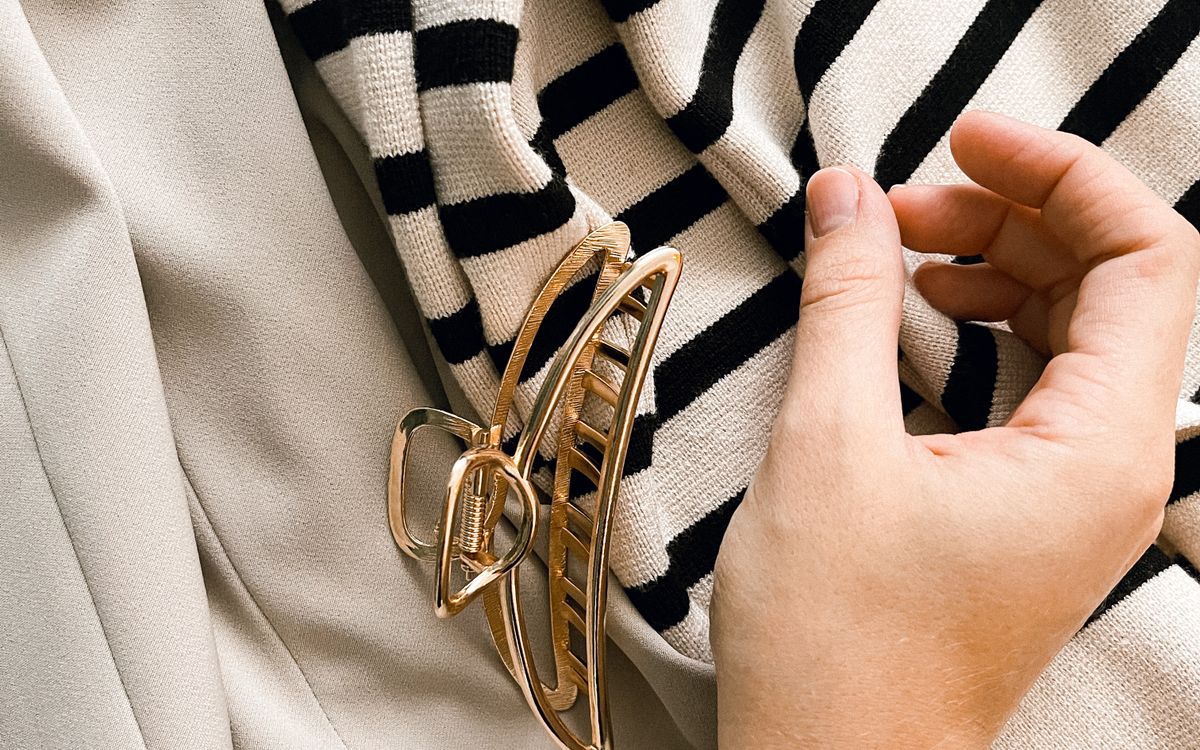
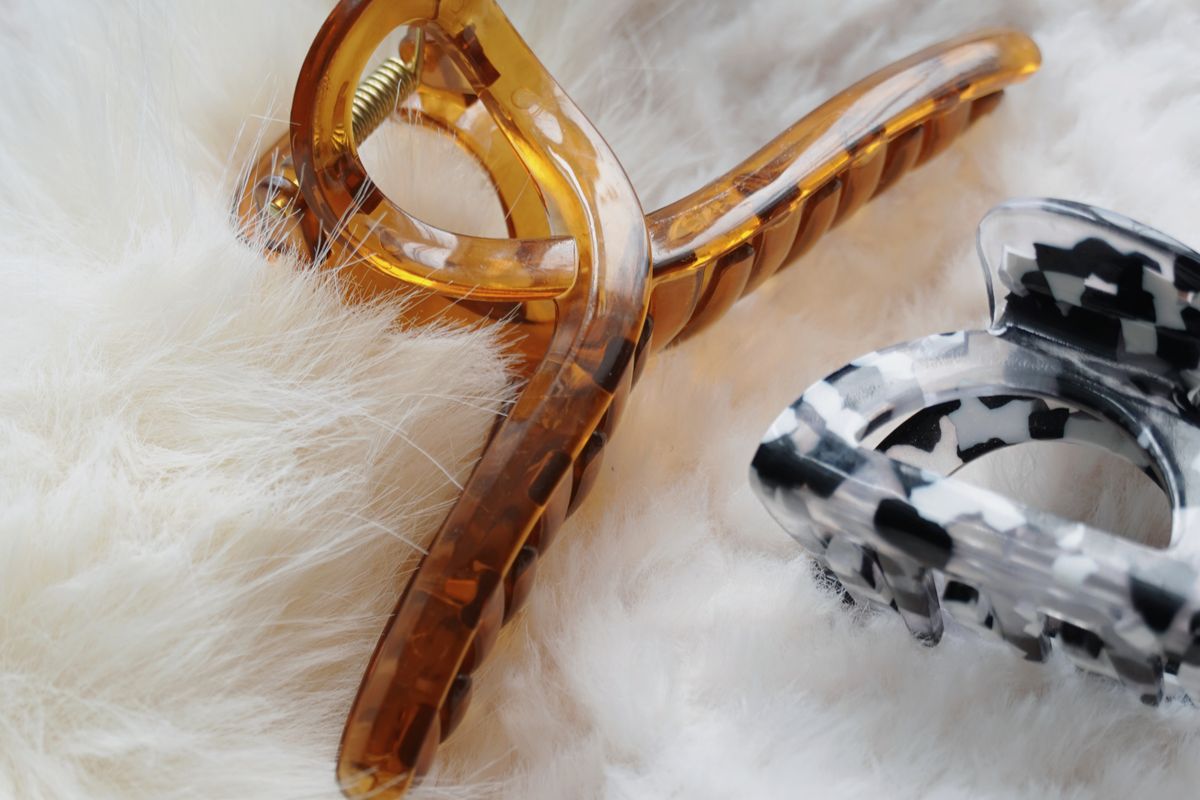
Two construction details separate clips that grip from clips that photograph well. Teeth length decides how far into the hair mass the clip can reach — short teeth grip only the surface and slide on anything but very dense hair. Spring quality decides whether the clip still clamps hard after a season; a metal-bodied claw generally outgrips an all-acetate one on thick or slippery hair, while acetate spreads pressure more gently and suits hair that breaks easily. Neither is wrong: match the body to the hair and the teeth to the updo, and whatever clip you choose will hold its finish and its spring longer with the care habits covered in the accessories guides.
Frequently asked
What size claw clip do I need for thick hair?
Clips in the roughly five-inch range with long, widely spaced teeth handle a full twist of thick hair. The failure mode with small clips is not that they fall out — it is that the spring cannot close over the volume, so the teeth never anchor at all.
Why does my claw clip slide out of fine hair?
Fine, freshly washed hair is too smooth for teeth to grip. Slightly textured hair holds far better, so updos last longer on second-day hair, and a smaller clip with closely spaced teeth anchors more hair surface than a large clip with few contact points.
Is a metal or acetate claw clip better for updos?
Metal claw clips hold harder and suit thick or slippery hair, because their prongs flex slightly and bite deeper. Acetate clips grip a little less but spread the load more gently and are kinder to hair that tangles or breaks easily.